
Best Vitamins For Ear Health (2026): Nutrients That Support Healthy Hearing Naturally
Introduction
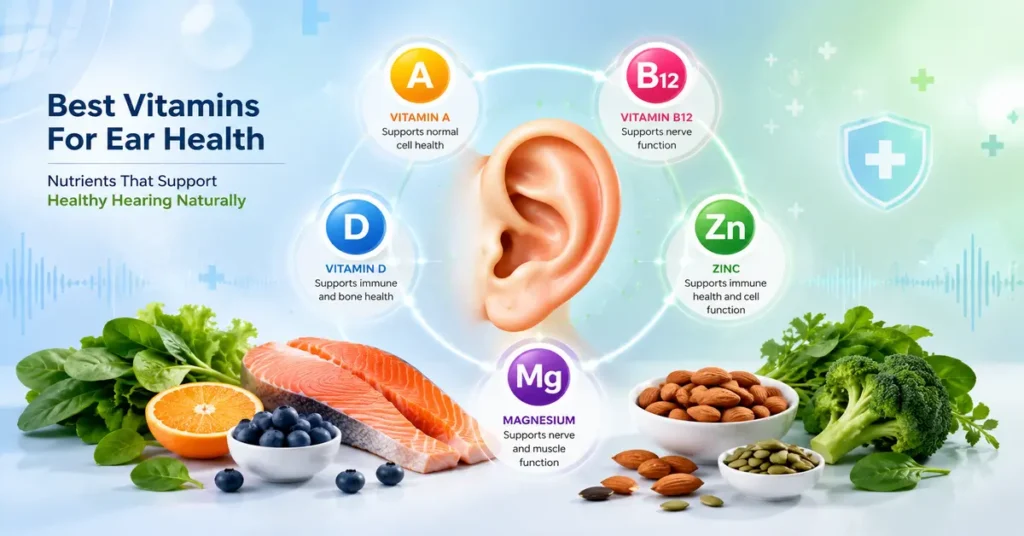
Best Vitamins For Ear Health: Healthy hearing plays an important role in communication, balance, and overall quality of life. While aging, noise exposure, genetics, and certain medical conditions can affect hearing over time, nutrition is another factor that shouldn’t be overlooked.
Several vitamins, minerals, and plant-based nutrients contribute to normal nerve function, cellular health, and overall wellness. Although no vitamin can cure hearing loss or reverse permanent damage, maintaining adequate nutrient intake may help support the body’s natural hearing processes and long-term ear health.
If you’ve searched for the best vitamins for ear health, you’ve probably come across a wide range of supplements making bold promises. The reality is more balanced. Nutrients work best as part of a healthy lifestyle that includes a nutritious diet, regular exercise, hearing protection, and appropriate medical care when needed.
In this guide, we’ll explore the vitamins and minerals most commonly associated with hearing wellness, explain what current evidence suggests, discuss food sources, and help you understand when a hearing support supplement may be worth considering.
Quick Answer
If you’re looking for the best vitamins for ear health, these nutrients are among the most commonly discussed in hearing wellness research:
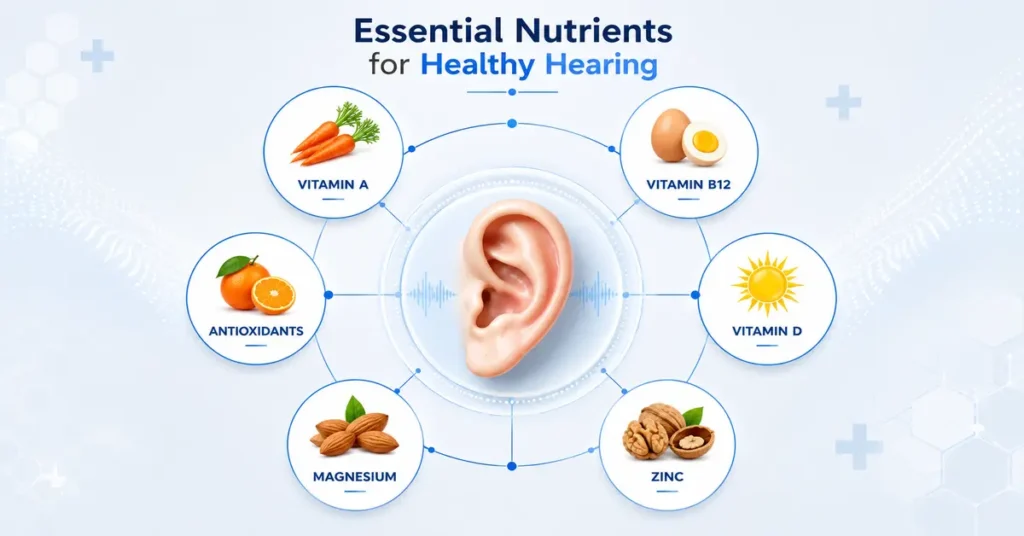
| Nutrient | Why It’s Important |
|---|---|
| Vitamin A | Supports normal cellular health |
| Vitamin B Complex | Helps maintain healthy nerve function |
| Vitamin B12 | Supports the nervous system |
| Vitamin D | Supports bone and immune health |
| Zinc | Supports immune function and cellular processes |
| Magnesium | Helps support normal muscle and nerve function |
| Antioxidants | Help protect cells from oxidative stress |
These nutrients are not a treatment for hearing loss, but maintaining adequate intake may support overall ear and auditory health.
Why Nutrition Matters for Ear Health
The ear is a complex organ that depends on healthy nerves, blood circulation, and specialized sensory cells to process sound.
Good nutrition helps support many of these normal body functions.
A balanced diet provides vitamins, minerals, amino acids, and antioxidants that contribute to:
- Healthy nerve function
- Cellular protection
- Normal circulation
- Immune system support
- Overall wellness
Because the auditory system works closely with the brain, maintaining general health may also contribute to healthy sound processing.
However, nutrition is only one part of hearing health. Regular hearing check-ups, protecting your ears from excessive noise, and managing chronic health conditions are equally important.
1. Vitamin A
Vitamin A plays an important role in maintaining healthy cells throughout the body.
It contributes to normal immune function and supports the maintenance of epithelial tissues, including those found in various parts of the body.
While Vitamin A is not a cure for hearing problems, maintaining adequate intake is an important part of overall nutritional health.
Food Sources
- Carrots
- Sweet potatoes
- Spinach
- Kale
- Pumpkin
- Eggs
2. Vitamin B Complex
The Vitamin B family includes several nutrients involved in energy metabolism and normal nervous system function.
Because the auditory system relies on healthy nerve communication, B vitamins are often included in hearing support supplements.
Important B vitamins include:
- Vitamin B1
- Vitamin B2
- Vitamin B6
- Vitamin B12
- Folate
These nutrients work together rather than independently.
3. Vitamin B12
Vitamin B12 is one of the most widely discussed vitamins in relation to nerve health.
It contributes to:
- Normal nerve function
- Red blood cell formation
- Energy metabolism
People with Vitamin B12 deficiency should seek medical advice for appropriate evaluation and treatment.
4. Vitamin D
Vitamin D is best known for supporting bone health, but it also plays an important role in immune function and normal muscle performance.
Researchers have explored whether Vitamin D status may be associated with certain hearing-related conditions. While studies are ongoing, current evidence does not show that Vitamin D alone can prevent or treat hearing loss.
However, maintaining healthy Vitamin D levels is considered an important part of overall wellness.
Good Food Sources
- Salmon
- Sardines
- Tuna
- Egg yolks
- Fortified milk
- Mushrooms exposed to UV light
5. Zinc
Zinc is an essential mineral involved in hundreds of enzymatic reactions throughout the body.
It contributes to:
- Normal immune function
- Cell growth
- Wound healing
- DNA synthesis
- Healthy protein production
Because Zinc supports many normal biological processes, it is often included in hearing support supplements.
Foods Rich in Zinc
- Oysters
- Beef
- Pumpkin seeds
- Chickpeas
- Cashews
- Lentils
6. Magnesium
Magnesium supports healthy nerve and muscle function while contributing to hundreds of metabolic processes.
Some research has investigated magnesium’s role in protecting the body from oxidative stress caused by loud noise exposure, but findings remain mixed.
Although Magnesium is not a treatment for hearing disorders, maintaining adequate intake supports overall health.
Magnesium-Rich Foods
- Spinach
- Almonds
- Pumpkin seeds
- Black beans
- Avocados
- Dark chocolate
7. Antioxidants
Oxidative stress is a natural process that occurs in the body over time.
Antioxidants help protect cells from damage caused by free radicals.
Several nutrients provide antioxidant activity, including:
- Vitamin C
- Vitamin E
- Green Tea Polyphenols
- Plant flavonoids
- Zinc
- Selenium
A diet rich in colorful fruits and vegetables naturally provides many antioxidant compounds.
Best Foods for Ear Health
Instead of relying only on supplements, many healthcare professionals recommend building a nutrient-rich diet first.
Here are some foods that naturally contain vitamins and minerals important for overall wellness.
| Food | Key Nutrients |
|---|---|
| Salmon | Vitamin D, Omega-3 |
| Spinach | Magnesium, Folate |
| Eggs | Vitamin A, Vitamin D, B12 |
| Pumpkin Seeds | Zinc, Magnesium |
| Blueberries | Antioxidants |
| Citrus Fruits | Vitamin C |
| Almonds | Vitamin E, Magnesium |
| Yogurt | Vitamin B12 |
Eating a variety of whole foods helps provide a broad range of nutrients that support overall health, including the nervous and auditory systems.
Can Supplements Help?
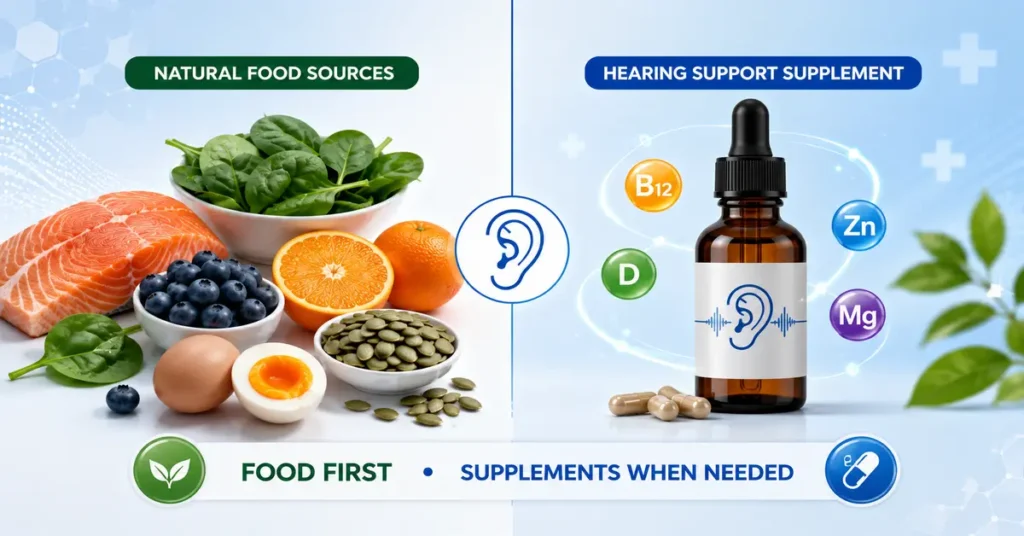
Some people meet their nutritional needs through diet alone, while others may choose dietary supplements to help fill nutritional gaps.
A hearing support supplement should complement a healthy diet—not replace it.
When evaluating a supplement, consider factors such as:
- Transparent ingredient information
- Manufacturing quality
- Third-party testing (if available)
- Money-back guarantee
- Realistic manufacturer claims
Choosing products from reputable manufacturers is generally a better approach than selecting supplements based solely on marketing promises.
Lifestyle Habits That Support Ear Health
Vitamins and minerals are only one part of maintaining healthy hearing. Everyday habits also play an important role in protecting your ears over time.
Here are several practical steps that may help support long-term ear health.
Protect Your Ears From Loud Noise
Frequent exposure to loud sounds may affect hearing over time.
You can reduce your risk by:
- Wearing ear protection in noisy environments.
- Keeping headphone volume at a moderate level.
- Taking regular listening breaks.
- Limiting prolonged exposure to loud music.
Eat a Balanced Diet
A diet rich in fruits, vegetables, lean protein, whole grains, and healthy fats naturally provides many of the vitamins and minerals discussed in this guide.
Rather than focusing on one “super vitamin,” aim for a variety of nutrient-dense foods every day.
Stay Physically Active
Regular physical activity supports healthy circulation throughout the body, including the structures involved in normal hearing.
Even moderate exercise such as walking, cycling, or swimming contributes to overall wellness.
Avoid Smoking
Smoking has been associated with numerous health risks, including effects on blood vessels and circulation.
Quitting smoking benefits overall health and may help support long-term wellness.
Schedule Regular Hearing Checkups
If you notice:
- Difficulty understanding conversations
- Ringing in the ears
- Sudden hearing changes
- Persistent ear discomfort
consult a qualified healthcare professional promptly.
Early evaluation is important because hearing concerns can have many different causes.
Who May Benefit From Hearing Support Supplements?
Some individuals obtain sufficient nutrients through food alone, while others may choose dietary supplements as part of their daily wellness routine.
A hearing support supplement may be considered by adults who:
- Want additional nutritional support.
- Don’t consistently meet their nutrient needs through diet.
- Prefer a convenient daily supplement.
- Are interested in botanical ingredients combined with vitamins and minerals.
However, supplements should never replace medical care or a healthy lifestyle.
How to Choose a Quality Hearing Supplement
Not all supplements are manufactured to the same standards.
Before purchasing any hearing support product, consider the following:
✔ Transparent Ingredient List
Choose products that clearly list their ingredients and provide usage instructions.
✔ Manufacturing Standards
Look for supplements manufactured in GMP-certified and FDA-registered facilities.
✔ Refund Policy
A clear money-back guarantee can provide additional confidence when trying a new product.
✔ Realistic Claims
Be cautious of products claiming to cure hearing loss or deliver instant results. Legitimate dietary supplements are intended to support normal body functions, not replace medical treatment.
Should You Consider a Hearing Support Supplement?
Many people can meet their vitamin and mineral needs through a balanced diet. However, some prefer supplements that combine botanical extracts, vitamins, minerals, and amino acids into a single daily formula for added nutritional support.
If you’re researching available options, our EchoXen Review explains the product’s ingredients, manufacturer claims, dosage, pricing, safety information, and refund policy in greater detail, helping you make a more informed decision.
If you’re considering a hearing support supplement, compare the latest official pricing, ingredient information, and package options before purchasing.
Frequently Asked Questions On Best Vitamins For Ear Health
What is the best vitamin for ear health?
There isn’t one single “best” vitamin. Nutrients such as Vitamin A, Vitamin B12, Vitamin D, Zinc, Magnesium, and antioxidants all contribute to overall health and normal body function.
Can vitamins restore hearing loss?
No. Vitamins are not a treatment for hearing loss and should not be expected to restore damaged hearing. They are intended to support overall health as part of a balanced diet.
Which foods are good for healthy hearing?
Foods rich in vitamins and minerals—including leafy greens, fish, eggs, nuts, seeds, berries, citrus fruits, and whole grains—can help support overall wellness.
Are hearing supplements better than food?
Whole foods should always be the primary source of nutrition. Supplements may be useful for some individuals to help fill nutritional gaps but should complement, not replace, a healthy diet.
When should I see a doctor about hearing problems?
Seek medical advice if you experience sudden hearing loss, persistent ringing in the ears, ear pain, dizziness, or ongoing difficulty hearing conversations.
Conclusion On Best Vitamins For Ear Health
Maintaining healthy hearing involves much more than taking a single vitamin. A balanced diet, regular exercise, hearing protection, and routine medical care all contribute to long-term ear wellness.
Nutrients such as Vitamin A, B-complex vitamins, Vitamin B12, Vitamin D, Zinc, Magnesium, and antioxidants support normal body functions that are important for overall health. While they cannot cure hearing loss, ensuring adequate intake is an important part of a healthy lifestyle.
If you’re considering a hearing support supplement, focus on products from reputable manufacturers that provide transparent ingredient information, realistic claims, and quality manufacturing standards.
By combining smart nutrition with healthy daily habits, you can take meaningful steps toward supporting your long-term hearing health.